Why the Gaps Belong in a Festival Plan
A festival plan built around one anchor event leaves room for food, discovery and rest, so the day feels purposeful without turning every interval into a race.
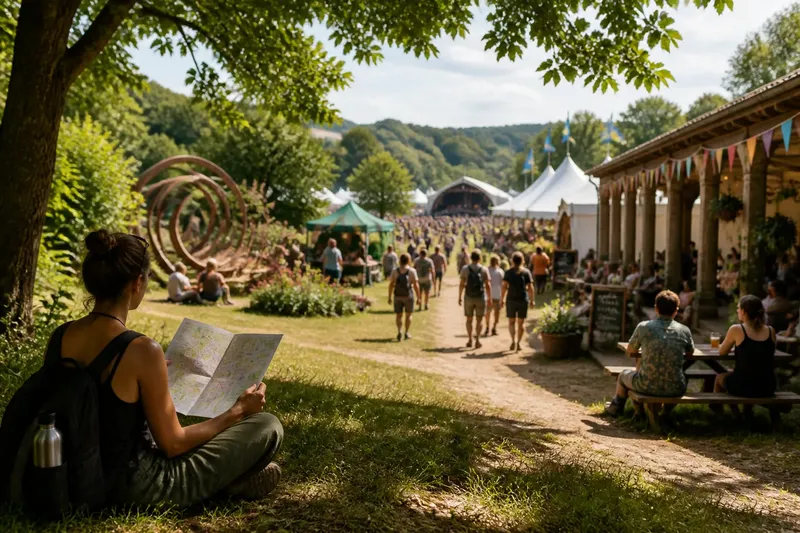
The most common festival-planning mistake is treating the site as a route between performances; the cost is missing the character of the place itself. A festival plan can make room for its overlooked corners, changing sounds and small encounters, without turning a wander into another item on a schedule.
Read the festival landscape
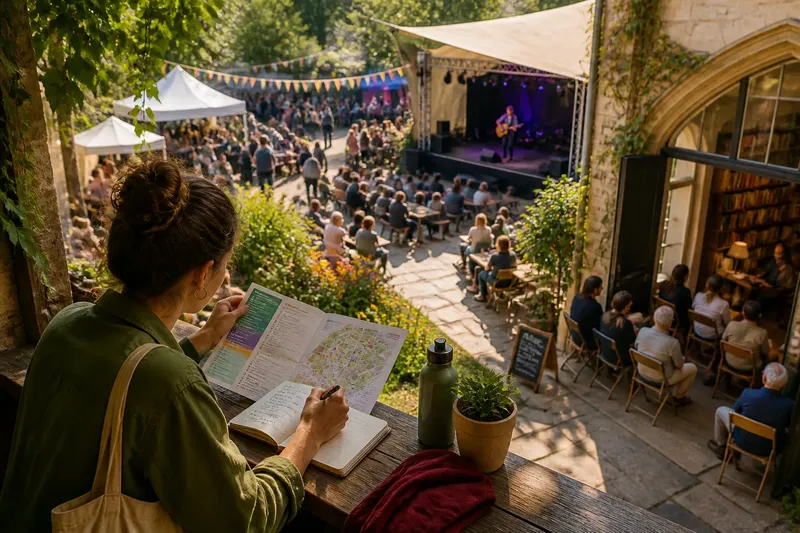
Start with the map, but read it as more than a set of directions. Look for how the festival is arranged: open lawns, covered walkways, food courts, craft areas, riverside paths or quieter edges. The spaces between stages often have their own atmosphere, and knowing what lies where makes it easier to follow your curiosity without feeling lost.
Check the organiser’s map and site information for entrances, accessible routes, seating, water points and any areas that require a separate ticket. A map can also reveal useful transitions: a path that passes an installation, a courtyard near a food stall, or a sheltered stretch between venues. Treat these as possibilities, not appointments.
Say you arrive at a festival whose map shows a sculpture garden beside a covered arcade and a small tea stall. You note the arcade as a possible place to pause if rain starts, then wander towards the garden after your chosen performance. If the garden is busy, you can turn towards the arcade instead; the result is a day shaped by the site, not derailed by a missed plan.
Follow a small curiosity
A festival can reward attention to details that do not announce themselves from a main stage. Listen for music drifting from a tent, watch how a maker works, or pause by an artwork long enough to notice how people respond to it. These are ways to engage with the festival as a place, not merely as a sequence of acts.
Choose a loose thread rather than a destination list. You might follow a line of bunting to a community display or browse the stalls selling handmade prints. If the thread leads somewhere dull or crowded, change direction. Curiosity works best when you are free to stop, turn back or sit down.
For a group, agree that a brief wander can be individual. One person might browse a bookstall while another listens to a nearby acoustic set; arrange a clear meeting point, such as the information tent, before splitting up. That small bit of coordination leaves everyone free to enjoy a different corner.
Choose a kind of pause
Time between performances can hold more than waiting. Decide what you need from it in broad terms: a place to sit, a meal, a quieter soundscape, a bit of exploring or company. You need not settle the exact activity until you see how the day feels.
- If your feet feel tired, check the map for marked seating; if it is available nearby, sit there, and if it is crowded, look for a quieter edge or covered area.
- If you are hungry, check where food stalls and seating are located; if a table is open, take a proper meal break, and if not, choose a less congested place to eat.
- If the site feels noisy, check the organiser’s access information for a quiet area; if one is open and suitable, use it, and if not, move away from speaker stacks and busy routes.
- If you want to explore, check which installations or makers’ stalls are nearby; if one catches your attention, spend time there, and if the area is packed, follow another path.
- If rain begins, check the map for covered spaces; if the arcade or sheltered venue is accessible, pause there, and if it is full, choose another permitted covered area.
- If your group wants separate activities, check that everyone can reach the agreed meeting point; if the location is clear, split up briefly, and if it is confusing, stay together or choose a more obvious landmark.
These are choices, not tasks to complete. A pause can be successful even if it amounts to sitting under a tree and listening to the crowd settle.
Keep the wander comfortable
Comfort shapes what you can enjoy. Check the festival’s guidance on bags, food, refillable bottles and entry conditions before setting out. Carry only what suits your plans, and notice whether the route you have in mind involves grass, gravel, steps or exposed ground. The organiser’s access information can help you make choices that fit your needs.
Weather may change the best use of an open stretch. A shady path can be inviting on a bright day, while a covered seating area may matter more in rain. If you are attending with children or someone who needs steadier pacing, identify a straightforward place to rest and an easy landmark for meeting again. For specific access or health questions, contact the festival organiser or a qualified professional as appropriate.
Imagine you have a paper map, a refillable bottle and a preference for quieter spaces; those are invented details for this example. You check the map and see a garden, a food court and a marked quiet area. You head first to the quiet area for a pause, then choose the garden because the food court looks busy. The observable result is a calmer break and a clear alternative for later, rather than a rushed attempt to visit every place.
Questions about exploring?
How do I find quieter areas at a festival?
Check the organiser’s site map and access information for quiet spaces, seating and routes away from stages. If the marked area is busy, move towards a less crowded edge and ask a steward for current guidance.
Should I plan what to explore?
Mark a few places that interest you, such as an art installation or makers’ tent, but leave the order open. That gives you useful options without making discovery feel like another performance to catch.
What should I do if a festival space is crowded?
Choose another nearby space rather than forcing your way into a packed area. A less busy path, covered arcade or place to sit may suit the moment better; follow steward instructions and site rules.
How can a group wander without losing one another?
Agree on a recognisable meeting point and a way to get help if plans change, such as asking a steward or using the festival’s information point. If the landmark is hard to describe or reach, stay together and choose a clearer one.
Let place shape the day
A festival’s in-between spaces can make a day feel rooted in its setting: the chatter near a craft tent, a breeze along an open path, or the quiet contrast of a courtyard after a loud set. You do not need to seek out every corner. Notice what is nearby, choose what suits your energy, and allow a change of mind.
For a festival plan, the useful note may be just a few places to recognise: a sheltered spot, a place to eat and one area that sparks curiosity. Keep the rest open. The main phrase, festival plan, need not mean a timetable; it can be a way to meet the festival on its own terms.