The perfect schedule is a festival myth
A festival schedule can connect you with the art, people and places you care about without turning the day into a race from one venue to another.
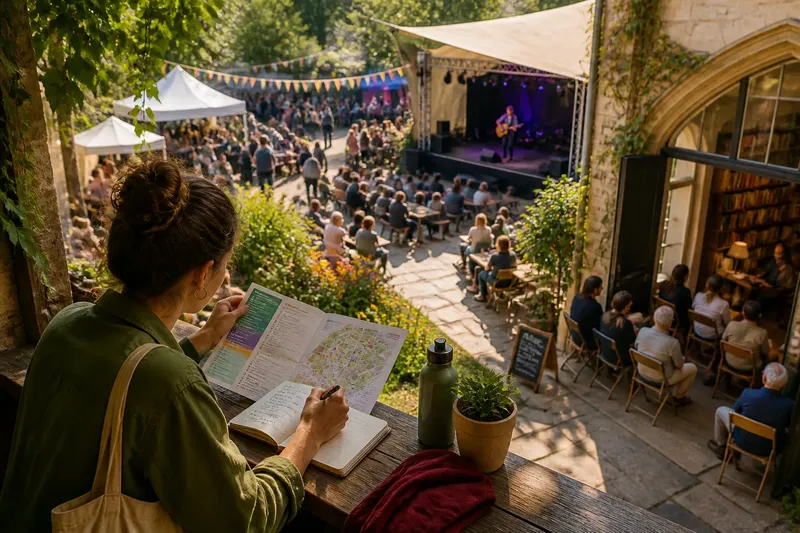
The common mistake with a festival schedule is choosing performances before checking what kind of day the festival actually offers. The cost is a plan that may suit a row of theatre seats but miss the pleasure of a market square, a hands-on workshop or music drifting across an outdoor stage. Start by treating the programme as a map of different experiences, not just a timetable.
Read the festival landscape
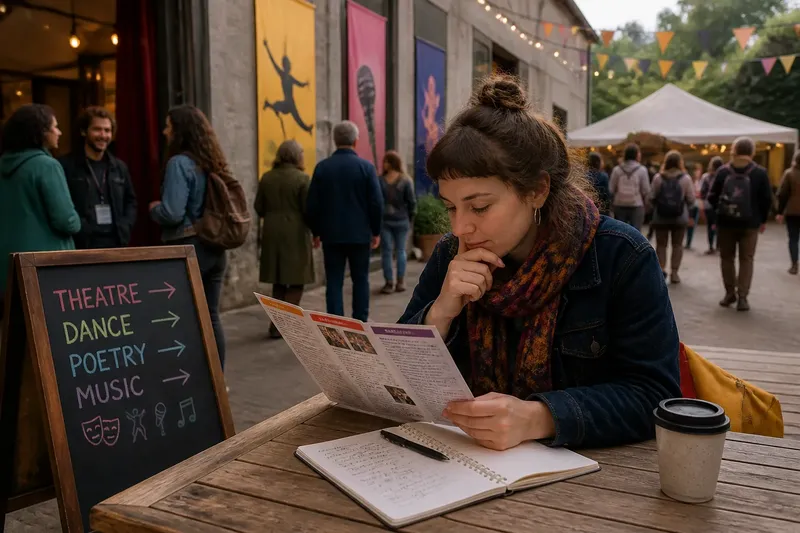
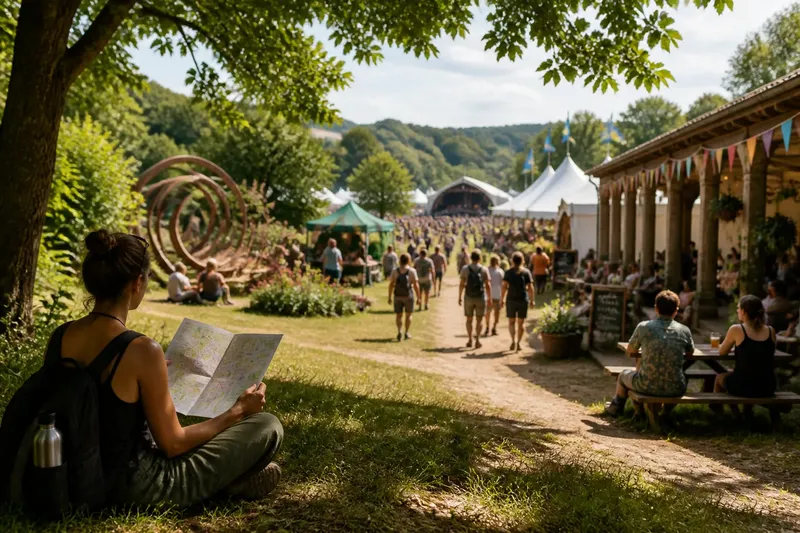
Before choosing events, look at how the festival is arranged. Is it spread across several venues, gathered around one site, or threaded through streets and public spaces? Notice which events are performances, which invite participation, and which are designed to be encountered in passing.
Those distinctions matter. A seated play asks you to arrive ready to settle; a workshop may need active participation; a pop-up performance might reward a flexible approach. Check the organiser’s notes for entry, booking, access and weather details, especially when an event’s format is not clear from its listing.
Choose one feature of the festival that interests you beyond its headline acts: perhaps a particular neighbourhood, an unusual venue or a programme of local makers. It gives your selections a shape that a list of names alone cannot provide.
Choose by experience
Browse the programme for the kinds of moments you want, rather than trying to include every artist you recognise. You might be after a quiet performance, a lively crowd, a new subject or the chance to make something with your hands. A clear preference helps distinguish genuine interest from the fear of missing out.
Make a short list of the events that best match that preference. For each one, note what appeals and what you need to know before committing: venue, format, booking conditions or any access information. Keep the list selective enough that you can explain why each event is there.
- If an event’s format is unclear, check the organiser’s description; if it remains uncertain, contact the venue before relying on it.
- If the venue is unfamiliar, look up its location and entrance; if the route is awkward for your needs, choose a more suitable event.
- If booking is required, confirm the terms; if you cannot meet them, select an event that accepts your intended way of attending.
- If an event is outdoors, check the organiser’s weather note; if conditions make it unsuitable for you, choose an indoor alternative.
- If access details are missing, ask the organiser; if the answer does not meet your needs, avoid building your visit around that event.
- If two events appeal for the same reason, compare their formats and settings; if neither stands out, leave the choice open until you have clearer information.
Festival schedule questions?
How do I choose between similar events?
Compare what each offers in practice: setting, format, subject and the kind of attention it asks from you. Pick the one that best fits the experience you want, or keep both in view if the programme offers different sessions.
Should I book every event in advance?
Book the events that matter most if the festival offers advance booking or limited capacity. Check the organiser’s terms before relying on a walk-up option, and leave less certain choices uncommitted where possible.
What if two events I want overlap?
Choose the event that better suits your reason for attending, then check whether either has another session or format. If there is no alternative, let one go without treating the decision as a failure.
Can I attend without a fixed itinerary?
Yes, if the festival has activities that welcome casual arrival and you are comfortable with any booking or entry conditions. Keep the programme available for checking details, while allowing yourself to follow an appealing sound, space or conversation.
Compare the settings
A performance is not only its description. A converted hall, a small gallery and an open-air stage can give the same kind of work very different textures. Look at venue information and the organiser’s notes so you know whether you are choosing a close, quiet encounter or a busy shared space.
Say you are drawn to a poetry reading in a library and a spoken-word set in a busy courtyard. Imagine the library listing says the event is seated and booked, while the courtyard set welcomes people to drop in. If you want to listen closely, choose the library and follow its booking terms; if you prefer movement and a social atmosphere, try the courtyard. The decision is based on the stated formats, not an assumption that one event is better.
Also notice what sits around the venue: a place to wait, a covered area, or nearby food and drink. These details can change how the event fits your day, even when they do not appear in its artistic description.
Follow the details
Use the festival app, printed programme or organiser’s website to check current times, venue names and notices. A saved listing or brief note can help you find the right entrance without keeping your phone in hand throughout the event.
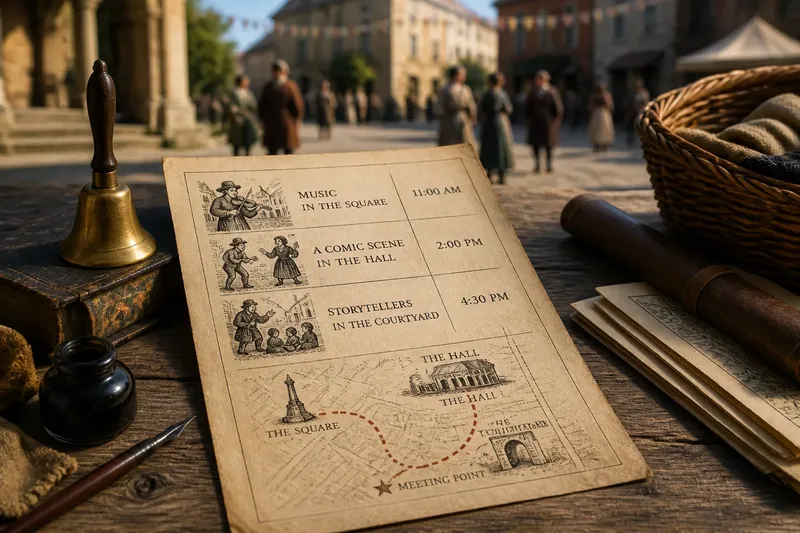
If you are going with friends, compare the events each person is keen to see and agree where you will meet if you split up. That is more useful than expecting a group to share every preference. Respect booking and entry conditions, and check with the organiser when a practical detail remains unclear.
Leave room for discovery
Once you have chosen events that reflect what interests you, let the rest of the programme remain available rather than treating it as a set of obligations. You may find a maker demonstrating a craft, an artist you have never heard of or a lively patch of the festival that deserves a longer pause.
A festival schedule works best when it helps you choose, not when it decides every moment for you. Use “festival schedule” as a prompt to connect performances with places and formats that appeal, then finish the day by saving one artist, venue or idea you would like to remember. That small note can carry the festival’s character with you long after you leave.